Metanail Review: What It Is, What the Evidence Says, and Who It May Suit
Last updated: October 11, 2026. This is an independent review, not the manufacturer’s website.
- What it is: Metanail (also called Metanail Serum Pro) is a plant-based topical serum sold for toenail and foot-skin care, applied to the nail once a day according to the seller.
- Price: listed at $49 per bottle at the time of writing, with 3- and 6-bottle bundles. Offers change, so confirm on the seller’s checkout page.
- Guarantee: 60-day money-back guarantee handled by the seller.
- Evidence: we did not find an independent clinical trial of the finished product. Some individual ingredients show activity in laboratory studies, which does not prove the serum clears a nail infection.
- Not a drug: it is not an FDA-approved medicine and the FDA has not evaluated its claims.
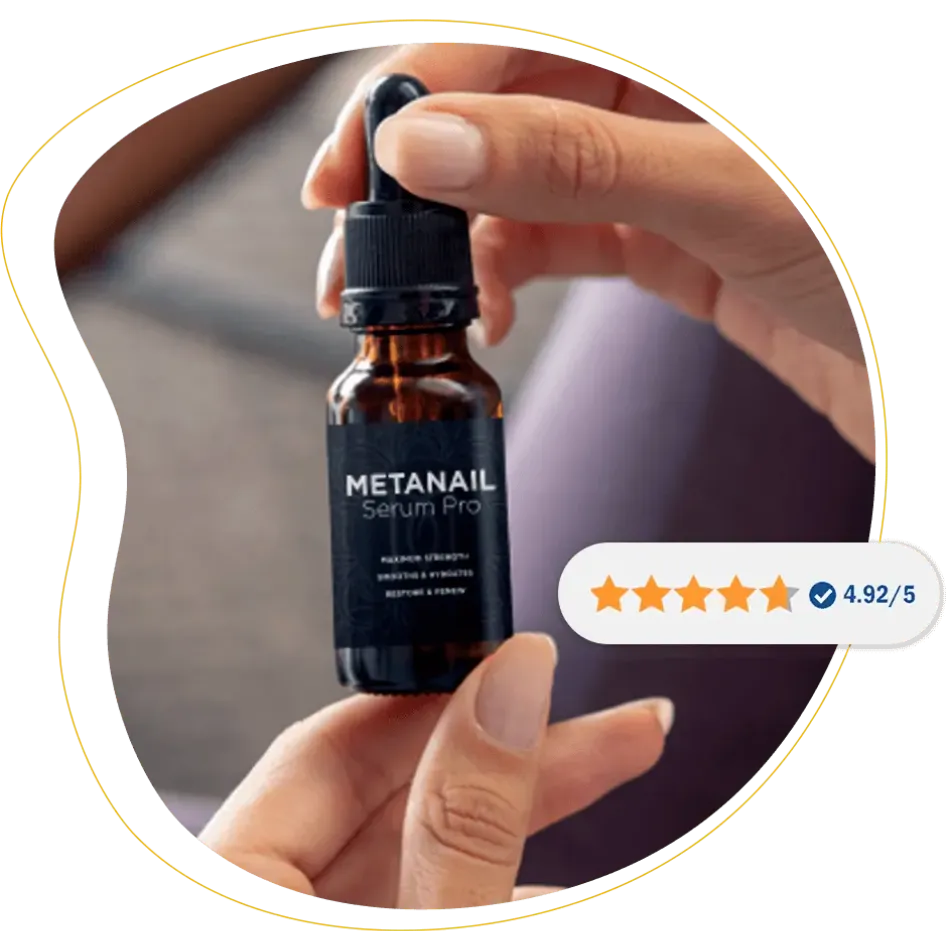
Toenail fungus (onychomycosis) is slow, stubborn and often misdiagnosed, so it attracts many products that promise fast results. This page explains what Metanail is, what its ingredient list suggests, how it compares with other options, and what to check before buying.
Check Current PriceWhat is Metanail?
Metanail is a liquid serum marketed to support the look and health of nails affected by fungus, and to soothe dry or flaking skin around them. The seller describes a three-stage approach: protect the nail and surrounding skin, apply antifungal botanicals, then condition the nail as it grows out. It is sold online through the seller’s own checkout, where it is also offered with a separate oral product, Metanail Total Cleanse, which is a different product with its own claims and is not reviewed here.
First, understand nail fungus
Most nail fungus is caused by dermatophytes, especially Trichophyton rubrum. The infection lives in and under the hard nail plate, which is why creams and serums struggle to reach it. Toenails grow only about 1 mm a month, so a clear nail can take well over a year to replace itself, even if the infection is gone. Any product should be judged over months, not weeks.
Not every discolored or thick nail is fungal. Psoriasis, repeated injury and other conditions look similar, and a clinician can confirm infection with a simple nail sample. Treating the wrong condition wastes time and money.
How Metanail is said to work
According to the seller, the serum is applied once daily after washing and drying the feet. Its protective ingredients are meant to soften and seal cracked skin, its botanicals are meant to discourage fungal growth, and its vitamins and moisturizers are meant to condition new nail growth. These are the manufacturer’s descriptions. We could not find published testing showing that the finished formula penetrates the nail plate or clears an infection.
Ingredients and what research suggests
The ingredient list we reviewed names over 20 plant-based and nutrient ingredients but does not state concentrations, which makes evidence-based comparison difficult. The table groups the main ones.
| Ingredient | Marketed role | What research suggests |
|---|---|---|
| Green tea extract | Antifungal support | Compounds such as EGCG show antifungal activity in laboratory studies. Strong clinical data for nail infections is lacking. |
| Geranium oil, lemon peel extract | Against T. rubrum | Some essential oils inhibit fungi in lab dishes. That does not show they reach or clear infection beneath a nail. |
| Rosemary, sage, hops, Scots pine, horsetail | Antimicrobial botanicals | Limited, mostly in-vitro data; no nail-specific clinical evidence that we found. |
| Witch hazel, gotu kola, aloe vera | Skin soothing and barrier support | Commonly used for skin comfort. They support the skin around the nail rather than treat infection. |
| MSM | Reduce soreness | Used in joint and skin products; evidence for fungal nails is lacking. |
| Hyaluronic acid, vitamins C and E, jojoba oil, glycerin | Hydration and nail conditioning | Moisturizing and conditioning. They may improve how dry, brittle nails look but do not treat an infection. |
How Metanail compares with other options
| Option | What to know |
|---|---|
| Prescription oral antifungals (for example terbinafine) | Generally the best-studied option for toenail fungus. Requires a prescription, may need blood tests, and is not suitable for everyone. |
| Prescription topicals (efinaconazole, tavaborole, ciclopirox) | Tested in clinical trials, but complete cure rates are modest and treatment typically runs many months. |
| Natural or over-the-counter topicals, including Metanail | Mostly limited or small studies. Results vary and are hard to verify. |
| Laser and device treatments | Mixed evidence, higher cost, availability varies. |
| Foot hygiene | Keep feet dry, change socks daily, do not share clippers, and treat or rotate shoes. Helps with any option and lowers the chance of reinfection. |
Realistic expectations
If Metanail helps, the visible sign is clear nail growing out from the base, which takes months. Early changes in comfort or skin dryness are more likely to reflect moisturizing than clearing infection. Use it as directed, stop if irritation develops, and take photos monthly so you can judge progress honestly.
See a doctor first if…
- You have diabetes, poor circulation or a weakened immune system.
- The nail is painful, swollen, oozing or the redness is spreading.
- You are pregnant or nursing, or take prescription medicines.
- You are not sure the problem is fungus.
Price, guarantee and buying
At the time of writing, one bottle is listed at $49, with 3- and 6-bottle bundles at lower per-bottle prices. The seller also shows a higher “regular price”, which we could not verify as a historical price. The 60-day money-back guarantee, shipping and billing are handled by the seller, so read the refund policy and keep your order number. Questions can be sent through the contact page.
See Bundles on the Seller’s SitePros and cons
Pros
- Simple once-daily application
- Non-prescription, non-oral product
- Moisturizing ingredients may help dry nails and skin
- 60-day refund window
Cons
- No independent clinical trial of the finished product found
- Ingredient concentrations not stated
- Results can take many months
- Not a replacement for medical diagnosis
Frequently asked questions
Is Metanail FDA approved?
No. The FDA does not approve dietary supplements or cosmetic-type topical products before sale. The seller states it is made in an FDA-registered facility, which is not the same as product approval.
How long should I use it before judging results?
Toenails grow slowly, so several months of consistent use is a fairer test than a few weeks.
Can it replace a prescription treatment?
There is no evidence that it can. If your infection is severe or you have a health condition that raises risk, ask a doctor about proven options.
Are there side effects?
Plant extracts and essential oils can irritate skin or cause allergic reactions in some people. Stop use and seek advice if redness, burning or swelling develops.
How do I get a refund?
Contact the seller within 60 days of purchase using the details on the contact page.